
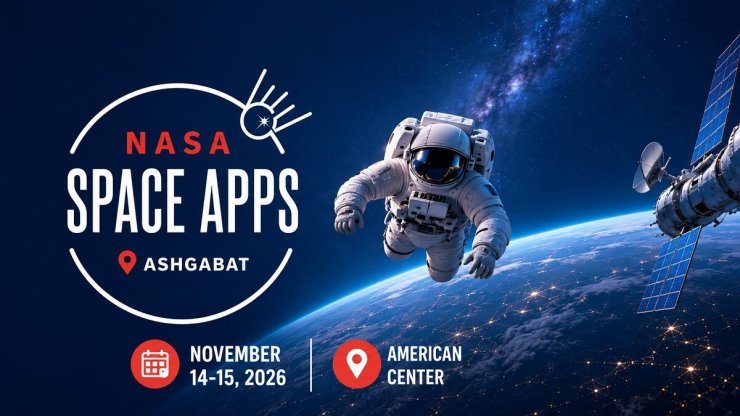
Registration for the NASA Space Apps Challenge 2026 opened on August 26, 2026, and if you have been looking for a legitimate reason to finally build that data-driven idea you have been sitting on, this is probably the best one available to you right now. It is the world’s largest annual global hackathon, it is completely free to enter, and it is open to anyone regardless of age, educational background, or technical experience. You do not need a team. You do not need a ticket. You do not need to be a programmer.
What you need is an interest in using real data to solve a real problem, and two days in November to actually do it.
What the Hackathon Is
The NASA Space Apps Challenge is a two-day global hackathon organised by NASA where participants work on challenges written by NASA subject matter experts. Every team builds a solution using publicly available data from NASA and its international space agency partners. The challenges span software development, astrophysics, Earth science, agriculture, data visualisation, and storytelling.
The 2026 edition runs on November 14 and 15, 2026, simultaneously across more than 450 local events in over 190 countries and territories. There is also a virtual Universal Event for participants who cannot access a nearby local event.
This is not a pitch competition and it is not looking for polished startups. It is looking for people who can think creatively about a problem and build something that uses NASA data to address it. That could be a web app, a data model, a visualisation tool, an educational resource, or a piece of science communication. The format rewards ingenuity and collaboration, not just technical sophistication.
Why This Is Relevant for African and Nigerian Builders
Nigeria’s National Space Research and Development Agency (NASRDA) is one of the 17 official space agency partners for the 2026 edition. That is not a minor detail. It means Nigerian participants are competing in a hackathon that their own national space agency is formally part of, and it means locally relevant datasets and problem contexts are available to teams based in Nigeria.
Beyond Nigeria, the Senegalese Space Studies Agency (ASES) and the Angola National Space Programme Management Office (GGPEN) are also listed as partner agencies. The presence of multiple African space agencies in the partnership structure reflects a deliberate expansion of the hackathon’s reach and relevance across the continent.
For African builders specifically, this hackathon is one of the few genuinely accessible international competitions where the barrier to entry is zero and the ceiling is a global award evaluated by NASA scientists and engineers.
Who Can Participate
The eligibility criteria for the NASA Space Apps Challenge 2026 are as broad as they come. The hackathon is open to:
Students at any level, from secondary school to postgraduate study. Developers, engineers, data scientists, and researchers. Designers, storytellers, artists, and science communicators. Entrepreneurs and startup founders working in adjacent spaces. Citizen scientists and space enthusiasts with no professional background in the field. Anyone who is curious enough to spend a weekend building something with real data.
There is no minimum age requirement. There is no requirement to have previous hackathon experience. Teams can be formed on registration or during the last-minute team formation session at the start of the event. Solo participation is also permitted.
How the Two Days Work
Once registered, participants choose either a local event or the virtual Universal Event. The two-day hackathon structure follows a consistent format:
Day one opens with registration, networking, opening ceremonies, and team formation for those who arrive without a group. Challenge statements are presented, teams align around a problem, and building begins.
Day two is building, iteration, mentorship, and final submission. Project submission opens on November 14 at 9:00 a.m. local time. Once submitted, projects go through local judging first, and top projects are nominated to NASA’s global judging panel.
Throughout the event, mentors from technical and scientific backgrounds are available to support teams. Snacks, materials, and workspace are typically provided by local event organisers.
The Awards
Ten global winners are selected each year from thousands of project submissions across all participating countries. The 2025 edition awards included categories like Best Use of Science, Best Use of Data, and others covering the breadth of challenge areas.
Every eligible participant who submits a project before the deadline receives a NASA Space Apps Certificate of Participation. Local events may also offer their own prizes, certificates, and additional recognition depending on the organiser.
For a Nigerian or African developer, designer, or researcher, a global nomination from NASA’s judging panel is a credential that opens doors in ways that most local competitions simply cannot replicate.
How to Register
Registration is free and done entirely online through the official NASA Space Apps platform.
Step 1: Go to the Space Apps website and create your account.
Step 2: Navigate to the 2026 hackathon page and register.
Step 3: Browse the 450 or more local events to find one near you, or select the virtual Universal Event if you prefer to participate remotely.
Step 4: Form or join a team. If you are applying solo, the team formation session at the start of the event will connect you with other participants.
Step 5: Review the official challenge statements when they are released and build your solution during the November 14 to 15 hackathon window.
Application Link: https://www.spaceappschallenge.org/2026/
Hackathon Dates: November 14 to 15, 2026
Registration: Open now, free of charge
Format: In-person at 450 local events worldwide or virtual
Registration is already live. The hackathon is 11 weeks away, which is enough time to form a strong team, identify the challenge area you want to work in, and do some preparation with NASA’s open datasets before the event begins.
For more verified opportunities like this, updated monthly, visit: https://utibeetim.com/list-of-latest-opportunities-for-the-month/
Thank you for reading this post, don't forget to subscribe!
Are you interested in receiving the latest grant, funding, and business opportunities?
Join our newsletter for free and stay updated!
Click here to join our newsletter
Join our community:
Join our WhatsApp group
Join our Telegram group
Join our Facebook group