
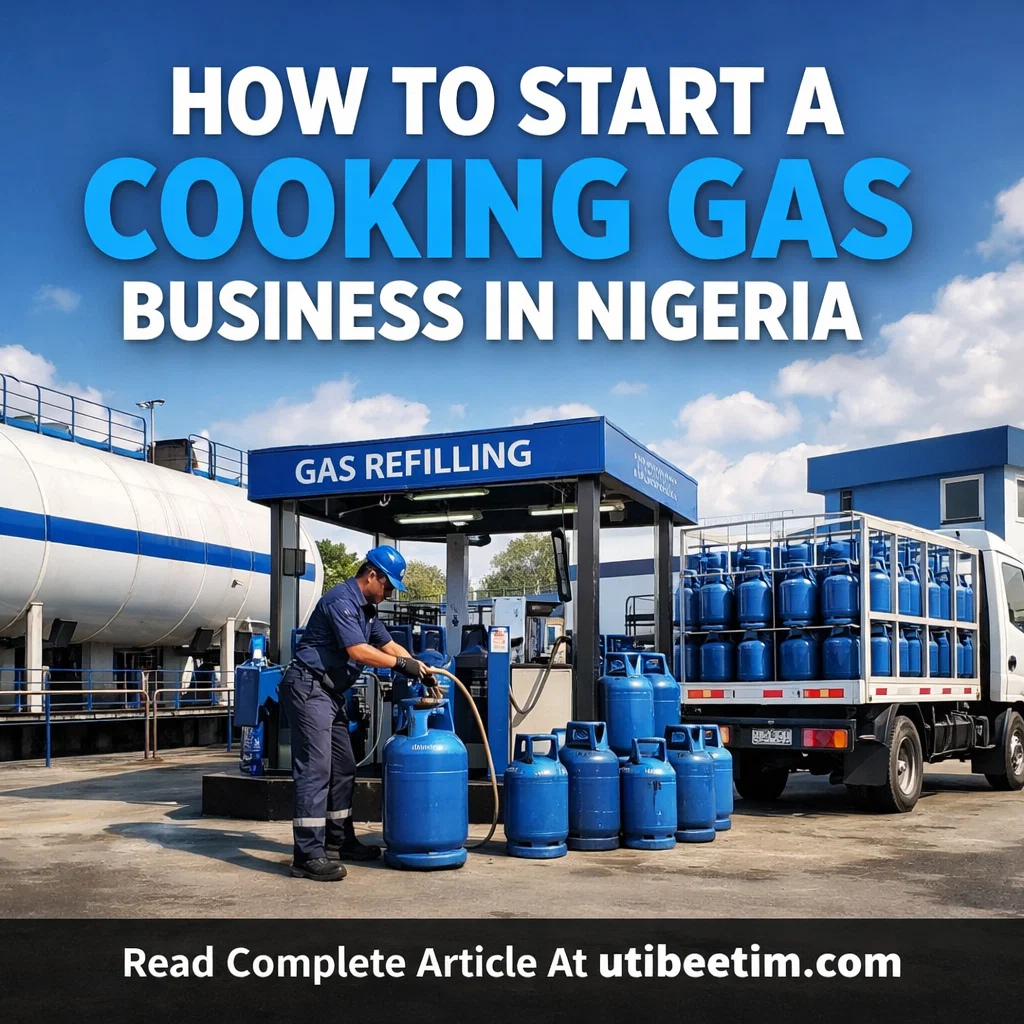
The cooking gas business in Nigeria has grown quietly but steadily over the last decade. As more households move away from kerosene, charcoal, and firewood, demand for Liquefied Petroleum Gas (LPG) continues to rise across cities, towns, and even semi-rural areas. For entrepreneurs looking for a practical, cash-flow-friendly business in 2026, cooking gas retail remains one of the most reliable options.
This guide explains how the business works, how much it costs to start, and the exact steps to follow if you want to enter the market.
Why Start Cooking Gas Business?
Several factors are driving LPG demand in Nigeria:
- Health and safety awareness
People now understand the health risks of cooking with firewood and charcoal. Gas burns cleaner and reduces indoor air pollution. - Government and NGO advocacy
Programs promoting clean cooking energy have increased LPG adoption, especially among urban and peri-urban households. - Urban growth and housing expansion
New estates, apartments, and mini-flats are being built every year, and most of them depend on cooking gas. - Repeat purchases
Unlike many businesses where customers buy once and disappear, gas customers refill every two to four weeks, creating predictable income.
For these reasons, LPG retail remains one of the few small businesses in Nigeria that can grow steadily without aggressive marketing.
Cooking Gas Business Model
Here are the types of cooking gas business you can start in Nigeria:
- Bulk Distribution (Primary Distributor): Involves purchasing large quantities of LPG directly from supply depots or refineries, storing it in massive tanks, and selling to smaller, secondary distributors or industrial clients.
- Refilling Plant (Mini Plant/Secondary Distributor): Operates with storage tanks ranging from 1 MT to 5 MT (or more), located within communities or gas stations. They purchase from primary distributors to refill customer cylinders.
- Retailer (Shop/Reseller): A small-scale model where an entrepreneur buys filled cylinders from a plant and retails them in residential areas. This requires minimal capital and focuses on convenience for the end-user.
- Mobile/Delivery Service (Gas-to-You): A modern model focused on service, offering convenience by picking up empty cylinders, refilling them, and delivering them to households or businesses.
- Auto Gas Conversion/Supply: Specializing in supplying LPG to vehicles equipped with dual-fuel systems.
The first model requires more capital and regulatory approvals but offers higher profit margins. The second model is cheaper to start and easier to manage, especially for beginners.
This article focuses mainly on the refilling plant model since it is the most common long-term business structure.
How Much Capital Do You Need to Start?
Startup cost depends on location, scale, and whether you are setting up a full gas plant or a small retail outlet. As of 2026, here is a realistic breakdown for a small to medium LPG refilling plant in Nigeria:
- Land or shop space (rent or lease): ₦300,000 to ₦800,000
- Gas storage tank (2 to 5 metric tons): ₦2.5 million to ₦6 million
- Dispensing machine and weighing scale: ₦300,000 to ₦700,000
- Safety equipment and fittings: ₦200,000 to ₦400,000
- Regulatory approvals and documentation: ₦150,000 to ₦300,000
- Initial LPG supply: ₦500,000 to ₦1.5 million
- Miscellaneous and setup costs: ₦200,000 to ₦300,000
Estimated total: ₦4 million to ₦10 million+
For a small reseller outlet, startup can range from ₦300,000 to ₦1 million, depending on how many cylinders you stock and your location.
Step-by-Step Guide to Starting a Cooking Gas Business in Nigeria
Choose a business model. There are two main types of cooking gas businesses in Nigeria: refilling and distribution. Refillers purchase cooking gas from suppliers and sell it to consumers in smaller quantities. Distributors purchase cooking gas in bulk from suppliers and resell it to retailers or refillers
This step is critical. Gas is safe when handled correctly, but dangerous when ignored.
2. Choose the Right Location
Location can make or break your gas business. A good location should:
- Be easily accessible by vehicles and pedestrians
- Be close to residential areas with steady population
- Meet safety setback requirements from houses, schools, and public buildings
Avoid congested inner streets with poor ventilation. Most regulatory bodies require minimum distance between gas plants and surrounding structures.
3. Register Your Business
Register your business with the Corporate Affairs Commission (CAC). A business name registration is usually sufficient for small plants, while larger facilities may require limited liability company status.
You will also need tax registration with your state Internal Revenue Service.
4. Obtain Regulatory Approvals
To operate legally, you must obtain approvals from relevant authorities, including:
- Nigerian Midstream and Downstream Petroleum Regulatory Authority (NMDPRA)
- Fire Service Department
- Town Planning Authority
- Environmental agencies (state level)
These approvals confirm that your location, tank installation, and safety measures meet national standards.
Do not skip this step. Operating illegally exposes you to shutdowns, fines, and serious safety risks.
5. Install Equipment and Safety Systems
Your core equipment includes:
- LPG storage tank
- Dispensing unit
- High-pressure hoses and valves
- Fire extinguishers
- Sand buckets and safety signage
- Leak detection equipment
Installation must be done by certified gas technicians. Improper installation is one of the leading causes of gas plant accidents in Nigeria.
6. Hire and Train Staff
At minimum, you need:
- A dispenser/operator
- A supervisor or manager
- A security guard (optional but advisable)
Ensure all staff receive safety training, understand emergency shutdown procedures, and know how to handle customers’ cylinders properly.
7. Secure LPG Supply
Establish relationships with major LPG suppliers and depot operators. Most plants buy in bulk and receive deliveries via gas trucks. Compare prices, delivery timelines, and reliability before choosing suppliers.
Consistent supply is crucial, especially during festive seasons when gas demand spikes.
8. Launch and Promote Your Business
Most gas businesses grow through visibility and word of mouth. However, you can speed up traction by:
- Installing clear signage
- Offering clean, accurate refills
- Providing fast service during peak hours
- Partnering with landlords, estate managers, and food vendors
Some operators also offer cylinder delivery services within nearby neighborhoods, which increases customer loyalty.
Profit Margins and Daily Earnings
Profit in the gas business depends on volume sold, supply cost, and operational efficiency.
On average, gas retailers make between ₦200 to ₦500 per kilogram, depending on market conditions and location. A small plant selling 1,000kg daily can generate gross margins of ₦200,000 to ₦500,000 monthly before expenses.
With good location and consistent supply, many operators recover their startup capital within 12 to 24 months.
Common Challenges in the Gas Business
- Price fluctuations
LPG prices can change weekly based on exchange rates and depot supply. This affects margins and customer buying behavior. - Regulatory delays
Approval processes can be slow, especially in urban centers. - Safety risks
Poor handling, faulty cylinders, or bad installations can lead to serious accidents. - Power supply and equipment maintenance
Dispensing machines and pumps require steady power and regular servicing.
Proper planning, compliance, and staff training reduce these risks significantly.
Tips for Long-Term Success
- Never compromise on safety equipment or staff training.
- Maintain accurate cylinder weighing to build customer trust.
- Build relationships with landlords, caterers, hotels, and restaurants.
- Offer clean surroundings and organized service flow.
- Keep records of sales, supply costs, and maintenance schedules.
In this business, trust and reliability matter more than aggressive pricing.
Is the Cooking Gas Business Worth Starting in 2026?
Yes. Despite inflation, exchange rate volatility, and rising operational costs, LPG demand in Nigeria continues to grow. As more households switch to gas and cooking fuel alternatives decline, the market expands naturally.
For entrepreneurs who want a business with daily cash flow, repeat customers, and strong long-term demand, cooking gas retail remains one of the most dependable options in Nigeria in 2026.
Final Thoughts
Starting a cooking gas business is not just about buying equipment and opening a shop. It requires compliance, discipline, safety awareness, and customer trust. When done properly, it can become a stable income source and a scalable enterprise.
Whether you choose a small reseller outlet or a full LPG refilling plant, the opportunity remains strong in 2026. With careful planning, legal compliance, and professional operations, you can build a profitable gas business that serves your community while generating steady income.
Related Post: How to start Palm Oil Business in Nigeria
How To Start: Step By Step Guide
- Choose a business model. There are two main types of cooking gas businesses in Nigeria: refilling and distribution. Refillers purchase cooking gas from suppliers and sell it to consumers in smaller quantities. Distributors purchase cooking gas in bulk from suppliers and resell it to retailers or refillers
- Conduct market research. Once you have chosen a business model, it is important to conduct market research to identify your target market and assess the competition. This will help you to develop a business plan and marketing strategy
- Develop a Business Plan: Once you’ve done a proper market research, it’s time to create a business plan based on findings from your market research. You can save time and efforts by getting our expertly developed Cooking Gas Business Plan with 3 Years Financial Projections
- Register your business. You will need to register your business with the Corporate Affairs Commission (CAC) and obtain a business license from your local government
- Secure a location. Your business location should be easily accessible to potential customers and have adequate space for storing and refilling cooking gas cylinders
- Purchase equipment. The basic equipment you will need includes cooking gas cylinders, a gas filling machine, a weighing scale, and safety gear
- Hire staff. If you are planning to start a large-scale cooking gas business, you will need to hire staff to help you with operations
- Market your business. Promote your business through online and offline channels. You can also partner with other businesses in your community to cross-promote your products or services
Thank you for reading this post, don't forget to subscribe!
Are you interested in receiving the latest grant, funding, and business opportunities?
Join our newsletter for free and stay updated!
Click here to join our newsletter
Join our community:
Join our WhatsApp group
Join our Telegram group
Join our Facebook group