

Plantain farming remains one of the most dependable agribusinesses you can start in Nigeria today. Demand has never dropped. Nigerians eat plantain boiled, fried, roasted, and processed into chips and flour. The crop also rewards good management with income that keeps coming for years, not just one season.
I’ve reviewed and written farming business plans for several clients over the years, and plantain is one of the few crops where the numbers still work even with today’s rising input costs. This guide walks you through what it actually takes to start, from land to your first bunch sold, using current 2026 figures instead of outdated estimates.
Why Plantain Farming Still Works in 2026
Nigeria produces most of the plantain it consumes, but supply still falls short of demand in urban markets, which is why prices swing so widely. A bunch of plantain currently sells for anywhere between ₦3,000 and ₦12,000 depending on size, location and season, with prices climbing highest during periods of scarcity. That swing is exactly why farmers who plan around the calendar, instead of just planting and hoping, tend to do better.
Unlike many crops, plantain is also a multi-year investment. Once a mat is established, it keeps producing new suckers, called ratoons, for several years. Your biggest costs really only hit you once, in year one.
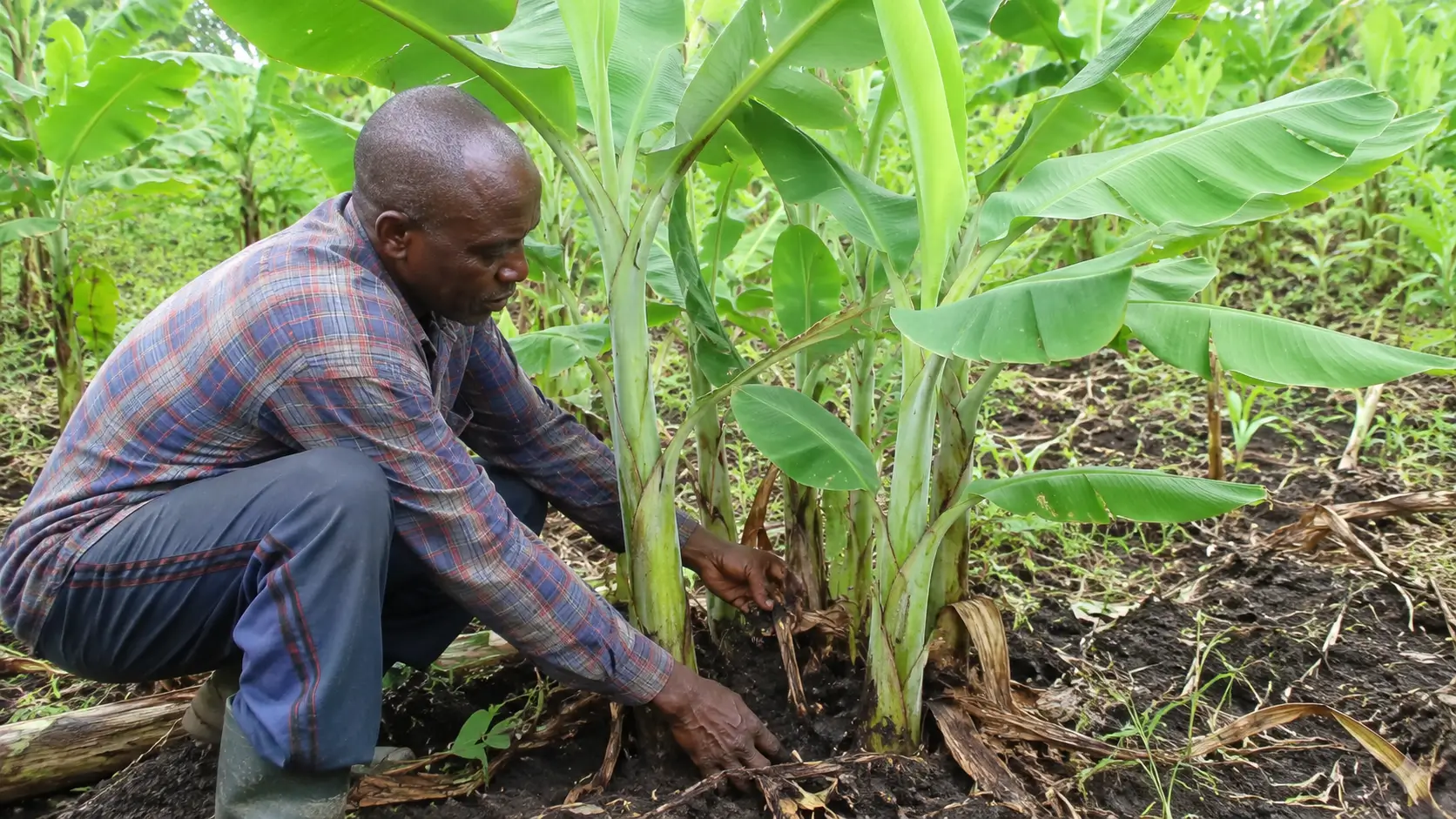
Step 1: Choosing the Right Land
Plantain needs deep, well-drained loamy soil with good water retention, ideally in Nigeria’s humid south where rainfall is steady. Before planting, clear the land and carry out basic pre-planting work: bush clearing, stumping, and manure application.
If you don’t own land, a hectare typically leases for ₦150,000 to ₦400,000 a year depending on the state and proximity to a city. Rates vary widely, so confirm current pricing with the local community or a land agent before committing to anything.
Step 2: Buying Quality Suckers, and Choosing the Right Variety
Your suckers determine most of your outcome, so this isn’t a place to cut corners.
- Standard suckers cost around ₦150 to ₦300 each.
- Improved, disease-resistant hybrid varieties like Agbagba (Elephant Giant) or Cameroonian Giant cost ₦300 to ₦500 from certified nurseries.
- Always buy from a known, reputable source. Suckers infected with nematodes or weevils will cost you far more in lost yield than you save on price.
For one hectare at the commonly recommended spacing of 3m by 2m, you’ll need around 1,600 to 1,700 suckers. At ₦150 to ₦500 per sucker, that’s ₦240,000 to ₦850,000 just for planting material, which alone is already more than the entire “total budget” many older guides quote for starting this business.
Step 3: Spacing and Planting for Maximum Yield
Wider spacing performs better in Nigeria’s humid south because it reduces fungal disease pressure. The most common recommendation is 3 metres between rows and 2 metres within rows, giving roughly 1,600 to 1,700 stands per hectare. Some farmers using drip irrigation push density up to 2,000 to 2,500 stands per hectare, but this requires more disciplined disease control.
Dig planting holes deep enough to bury the sucker’s base firmly. Remove all competing weeds and grass at planting time, and avoid overcrowding, since plantain roots spread wide in search of nutrients.
Step 4: Plant Care, Fertilization and Disease Control
This is the section most farmers underestimate, and where most of your annual income risk actually lives.
Black Sigatoka is the biggest disease threat to plantain in Nigeria. Left unmanaged, it can cut yield by 20 to 50 percent. Manage it by mulching with organic matter to build soil health, spacing your plants properly for airflow, and removing infected leaves promptly. The banana weevil, which attacks the plant’s underground rhizome, is the other major pest. It’s best controlled by planting clean, weevil-free suckers and maintaining strict field hygiene.
Feed your plants with fertilizer rich in nitrogen, phosphorus and potassium, and keep weeding on a fixed schedule rather than waiting until it becomes a visible problem.
How Much Money Do You Actually Need in 2026?
Here’s a realistic first-year budget for one hectare, built on current prices rather than figures from years ago:
- Land lease (if not owned): ₦150,000 – ₦400,000
- Suckers (1,600-1,700 at ₦150-₦500 each): ₦240,000 – ₦850,000
- Land preparation (clearing, manure): ₦100,000 – ₦200,000
- Fertilizer and herbicides: ₦150,000 – ₦250,000
- Labor (planting through first harvest): ₦150,000 – ₦300,000
- Contingency and tools: ₦100,000
Realistic total: ₦900,000 to ₦2.1 million for year one, depending on whether you lease land and which sucker variety you choose. From year two onward, costs fall sharply since your existing mats keep producing ratoons. You’re mostly paying for maintenance, not replanting.
Save Time With Our Ready-Made Plantain Farming Business Plan
You don’t need to start from scratch. We have a fully researched, ready-made Plantain Farming and Processing business plan you can download, edit, and submit today. It covers your financials, market analysis, operational plan, and funding requirements.
Download the Plantain Farming Business Plan Template
Registering Your Plantain Farming Business
Even a small farm should be registered as a business, both for legal protection and because most buyers, cooperatives and lenders will ask for proof of registration. Registering a business name with the Corporate Affairs Commission currently costs from ₦11,000 to ₦20,000 in government fees, though it’s worth checking the CAC fees page directly since the schedule has changed more than once in the past year.
If you qualify as a micro or small enterprise, watch for CAC’s ongoing free registration partnership with the Small and Medium Enterprises Development Agency of Nigeria (SMEDAN), which has waived statutory fees for selected applicants. Slots are limited and allocated through the SMEDAN portal, so it’s worth applying early. If you’d rather not handle the paperwork yourself, our business registration service can also help.
Get the Combined Farming and Processing Business Plan Package
If you’re planning to both farm plantain and process it into chips or flour, our combined plan covers everything in one document: financials for farming and processing, one comprehensive plan.
Get the Combined Plantain Business Plan
Harvesting, Processing, and Where to Sell
Most varieties are ready for harvest 8 to 12 months after planting, depending on the variety and how well the plants were maintained. Harvest when the fingers are fully rounded but before they start yellowing, unless a specific buyer wants ripe fruit.
Don’t stop at selling raw bunches. Plantain flour and chips carry higher margins than raw fruit and last longer in storage, which protects you from the price crashes that hit raw plantain during glut periods. If you package and sell processed plantain products commercially, register the Don’t stop at selling raw bunches. Plantain flour and chips carry higher margins than raw fruit and last longer in storage, which protects you from the price crashes that hit raw plantain during glut periods. If you package and sell processed plantain products commercially, register the product with NAFDAC first. This is a legal requirement for packaged food products in Nigeria, and it also makes retailers and supermarkets take your product seriously.
For raw bunches, your main markets are local food markets, wholesalers who supply motor parks and urban markets, and increasingly, aggregator platforms that connect farmers directly to buyers in Lagos, Abuja and Port Harcourt.
Common Mistakes That Cost New Plantain Farmers Money
- Buying suckers from unverified sources to save money, then losing the whole plot to weevils or nematodes.
- Planting too densely without a plan for disease control, which invites Black Sigatoka.
- Ignoring the business side entirely: no records, no registration, no plan for what happens after the first bunch sells.
- Selling only raw plantain and missing the higher, steadier margins available in processing.
If you’re weighing this against other agribusinesses before committing your capital, our guides on rice farming in Nigeria and poultry farming in Nigeria cover two other agribusinesses with similarly strong local demand.
Is Plantain Farming Still Profitable in 2026?
Yes, but the honest answer depends on management, not luck. At 1,600 stands per hectare with realistic survival rates, a well-managed farm can produce well over a thousand marketable bunches per cycle. Even at a conservative average of ₦4,000 per bunch, that’s over ₦4 million in revenue from a single hectare, against a first-year cost of roughly ₦900,000 to ₦2.1 million.
The catch is that plantain prices swing hard with the seasons, so your actual return depends heavily on when you harvest and sell, and how much of your crop you can hold or process rather than dump during a glut. That’s exactly the kind of detail a proper business plan forces you to work through before you spend a single naira, not after.
Frequently Asked Questions
For one hectare, budget ₦900,000 to ₦2.1 million for year one, covering land, suckers, land preparation, fertilizer and labor. Costs drop sharply from year two since established mats keep producing new suckers on their own.
Most varieties are ready for harvest 8 to 12 months after planting, depending on the variety and how well the farm is managed.
Agbagba (also called Elephant Giant) and the Cameroonian Giant are the most recommended hybrid varieties, since both are more disease-resistant than standard suckers. They cost more upfront, around ₦300 to ₦500 per sucker, but usually pay for the difference in reduced crop loss.
At the commonly recommended 3m by 2m spacing, you need roughly 1,600 to 1,700 suckers per hectare.
Yes. Registering with the Corporate Affairs Commission costs from ₦11,000 to ₦20,000 depending on the current fee schedule, and it’s required if you want to work with cooperatives, banks or larger buyers. Check CAC’s free registration partnership with SMEDAN if your farm qualifies as a micro or small enterprise.
Black Sigatoka disease, which can cut yield by 20 to 50 percent if left unmanaged. Control it through proper spacing for airflow, mulching to build soil health, and removing infected leaves as soon as you spot them. The banana weevil is the other major threat, best avoided by starting with clean, weevil-free suckers.
Yes, but only with proper management. A well-managed hectare can produce well over a thousand marketable bunches per cycle, which at a conservative ₦4,000 average per bunch works out to more than ₦4 million in revenue against a first-year cost of ₦900,000 to ₦2.1 million. Actual returns depend heavily on when you sell and whether you can hold stock through price crashes.
Yes. The figures above scale down roughly in proportion to land size, so a quarter-hectare plot costs a fraction of the one-hectare budget. Just keep the same spacing and disease-management practices regardless of scale, since a small poorly managed farm loses money just as easily as a large one.
Want a Business Plan Written Specifically for Your Farm?
Every farm is different. Your location, land size, target market, and funding source all affect your numbers. Our custom business plan service means we research YOUR market, build YOUR financials from scratch, and deliver a document your bank or investor will take seriously. This is our highest-value service, and the one that gets the best results for our clients.
Order Your Custom Business Plan Today
Final Thoughts
Plantain farming rewards patience and planning more than luck. Get your land, suckers and disease management right in year one, and the mats you plant will keep paying you for years.
If you’re serious about turning this into a real business rather than a backyard project, the difference between farmers who struggle and farmers who scale usually comes down to one thing: a plan that’s actually built around their own land, budget and market, not a generic template.