
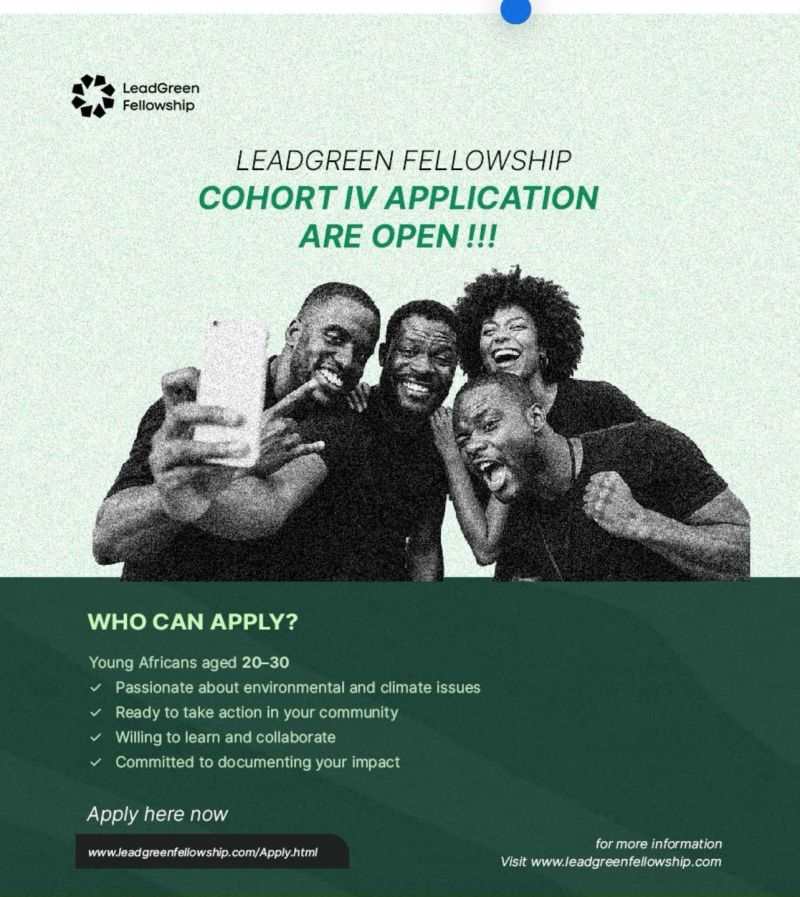
The LeadGreen Fellowship Cohort 4 (2026) is designed for young people who want to do something practical about environmental problems in their communities. It is a free online fellowship that takes participants through 12 weeks of learning, collaboration and environmental action. Rather than focusing only on lectures, LeadGreen expects fellows to identify problems around them and work on practical solutions through structured missions.
The programme is open to young Africans, particularly university students and recent graduates from limited-income or first-generation backgrounds.
What Is the LeadGreen Fellowship?
LeadGreen is building a network of young African changemakers working on environmental and climate-related issues.
The fellowship looks at environmental problems that are already visible across African communities, including:
- Plastic pollution
- Poor waste management
- Deforestation
- Biodiversity loss
- Flooding
- Climate change
- Unsustainable living
- Energy and environmental challenges
Participants learn about these issues and then consider how they can contribute to solving them within their own communities.
The programme is delivered online and is designed to fit around participants’ studies or other responsibilities.
Who Can Apply?
The official LeadGreen application page states that the programme is designed for young people who meet the following criteria:
- Aged 18 to 29 years
- Currently enrolled in university or recently graduated
- From a limited-income or first-generation background
- Interested in environmental or climate action
- Able to participate in the online programme
- Willing to work on a community-focused environmental project
Previous leadership experience is not strictly required. The programme is interested in young people who have the willingness to learn, take initiative and create impact.
This makes it suitable for students and recent graduates who may not yet have a long list of professional achievements but have a clear interest in environmental issues.
What Will Fellows Learn?
LeadGreen has structured the programme around the journey from understanding an environmental problem to actually doing something about it.
Environmental Foundations
Participants learn about major environmental challenges affecting Africa and explore how these problems appear within their own communities.
Green Skills and Solutions
The fellowship introduces practical approaches involving areas such as recycling, waste management, afforestation, sustainable living, climate action and green technology.
Environmental Action Missions
This is one of the more practical parts of the programme.
Fellows are expected to carry out environmental missions in their communities, document what they have done and provide evidence of their impact.
The idea is to move participants from simply being interested in climate issues to actually taking action.
Community and Peer Learning
Participants will also interact with other young Africans working on environmental challenges. This gives fellows an opportunity to exchange ideas, learn from other communities and build relationships that can continue after the fellowship.
How Long Is the Programme?
Cohort 4 runs from August 23 to September 20, 2026, according to the official LeadGreen website.
The programme is online and includes self-paced learning, weekly activities, live sessions and community project work.
The application page asks applicants to commit to dedicating 5 to 10 hours per week and remaining involved throughout the fellowship. Applicants also need reliable internet and access to a device capable of using platforms such as Zoom, Google Meet and Slack.
Is the Fellowship Fully Funded?
The programme is 100% free of charge for participants.
However, applicants should understand what “fully funded” means here. LeadGreen is primarily a free online fellowship. It is not presented as a cash grant for green businesses, and participants should not expect a direct business funding award simply because they are selected.
The main benefit is access to the fellowship’s learning, mentorship, peer network and practical environmental action activities without paying tuition.
What Do Applicants Need to Submit?
The application is fairly detailed.
Applicants will be asked for information about their:
- Education or profession
- Climate or social-impact experience
- Leadership experience
- Reason for wanting to join LeadGreen
- Environmental problem they care about
- Change they want to see
- Preferred climate area
- Proposed project or action
- Leadership and teamwork experience
- Weekly availability
A headshot is also required as part of the application.
One useful point is that applicants are not simply asked to say they are passionate about climate change. They are asked to identify an environmental problem and propose an action they would like to take.
That means you should think about your local community before applying.
What environmental problem do you actually see around you?
What could you realistically do about it?
Your answers to those questions can make the application much stronger.
Application Deadline
Deadline: September 20, 2026.
Applicants should submit their forms before the closing date rather than waiting until the final day.
How to Apply
Applications are submitted directly through the official LeadGreen Fellowship website.
Official Application Link:
https://www.leadgreenfellowship.com/Apply
For applicants looking for more opportunities, you can also see the latest opportunities compiled here:
The LeadGreen Fellowship Cohort 4 (2026) is a good fit for a young African student or recent graduate who wants to develop practical environmental knowledge and start working on a real community problem. It does not require previous leadership experience, but it does require commitment. The strongest applicants will likely be those who can explain a real environmental issue they care about and have a sensible idea of what they would like to do about it.